White-Tailed Deer Facts
New Jersey White-Tailed Deer Facts
New Jersey is home to a large population of white-tailed deer, one of the most recognized and adaptable wildlife species in the state. Whether you live in a rural area, suburb, or even near busy neighborhoods, chances are you’ve seen deer feeding in yards, crossing roads, or resting near wooded areas.
Understanding how deer live, feed, and reproduce helps explain why they can cause significant damage to landscapes, gardens, farms, and young trees throughout New Jersey.
What Kind of Deer Live in New Jersey?
The primary deer species found in New Jersey is the white-tailed deer (Odocoileus virginianus).
White-tailed deer are named for the bright white underside of their tail, which they raise like a flag when alarmed or running away.
They are highly adaptable animals and thrive in:
- Forest edges
- Suburban neighborhoods
- Farmland
- Parks
- Wetlands
- Backyard landscapes
New Jersey’s mix of woods, lawns, ornamental landscaping, and limited natural predators creates ideal habitat for deer populations.
How Big Are New Jersey Deer?
White-tailed deer sizes vary based on age, genetics, habitat, and food availability.
Average Adult Doe (Female)
- Weight: 90–140 pounds
- Height at shoulder: 30–36 inches
Average Adult Buck (Male)
- Weight: 120–250+ pounds
- Height at shoulder: 36–40 inches
Large mature bucks in New Jersey can exceed 250 pounds, especially in agricultural areas with abundant food sources.
How Long Do Deer Live?
In the wild, most white-tailed deer in New Jersey live:
- Does: typically 6–10 years
- Bucks: typically 3–6 years
Some deer can live longer, but many factors reduce lifespan including:
- Vehicle collisions
- Hunting pressure
- Disease
- Harsh winters
- Predators (especially on fawns)
What Do Deer Eat?
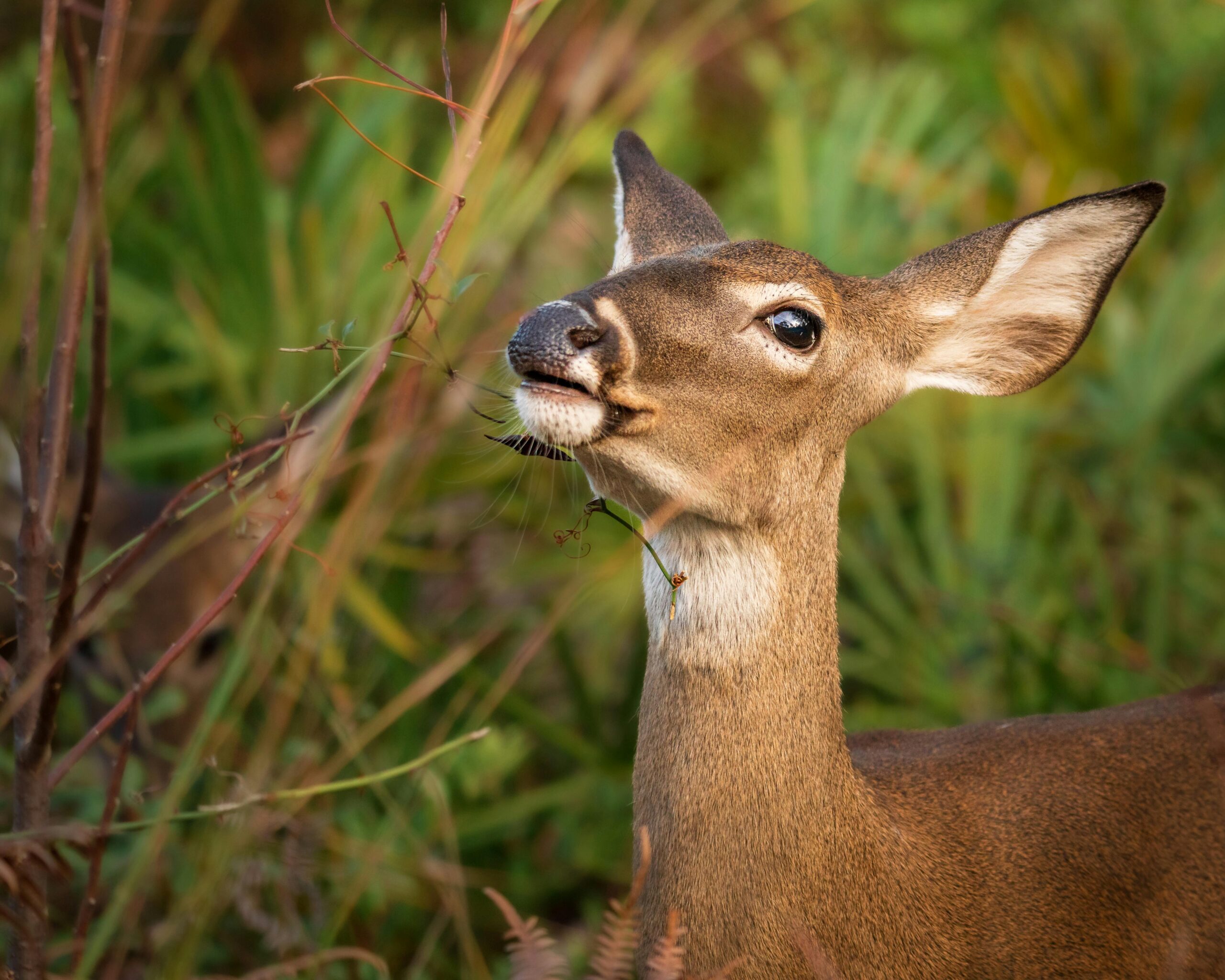
White-tailed deer are browsers, meaning they feed on leaves, stems, buds, flowers, fruits, nuts, and young shoots rather than grazing mainly on grass.
Common Foods Deer Eat in New Jersey
In Natural Areas
- Acorns
- Wild berries
- Tree buds
- Leaves
- Mushrooms
- Native plants
Around Homes & Landscapes
- Hostas
- Arborvitae
- Hydrangeas
- Roses
- Daylilies
- Tulips
- Vegetable gardens
- Young trees and shrubs
How Much Does a Deer Eat Per Day?
An adult deer can eat approximately:
5–10 pounds of vegetation per day
During difficult winters or periods of food shortage, deer may eat even more aggressively and consume plants they would normally avoid.
This is why homeowners often notice severe damage during harsh winters or drought periods.
How Many Babies Do Deer Have?
Female deer (does) typically give birth once per year.
Typical Reproduction
Young Does
- Usually 1 fawn
Mature Healthy Does
- Often twins
- Occasionally triplets
Fawns are usually born in:
- May
- June
Newborn fawns have white spots that help camouflage them in vegetation.
How Many Offspring Can a Doe Have in a Lifetime?
A healthy doe may produce:
10–20+ fawns during her lifetime
Because deer reproduce consistently and adapt well to suburban environments, populations can grow rapidly when conditions are favorable.
Why Deer Thrive in New Jersey
New Jersey provides excellent deer habitat because it combines:
- Wooded cover
- Ornamental landscaping
- Agricultural food sources
- Mild suburban environments
- Limited predators
Suburban neighborhoods often create ideal “edge habitat,” which deer prefer.
When Do Deer Grow Antlers?
Only bucks grow antlers.
Antler Cycle
Spring & Summer
Antlers grow rapidly and are covered in soft “velvet.”
Late Summer
Velvet dries and sheds.
Fall
Hard antlers are used during:
- Rutting season
- Fighting other bucks
- Displaying dominance
Winter
Bucks shed antlers and begin the cycle again.
Deer Are Most Active at Dawn and Dusk
White-tailed deer are primarily:
Crepuscular animals
That means they are most active:
- Early in the morning
- Late in the evening
This is why deer are commonly seen:
- Near sunrise
- Around sunset
- Along roadways during twilight hours
In heavily populated suburban areas, deer may also become more active at night to avoid people and traffic.
Deer Follow the Same Travel Routes
Deer are creatures of habit.
They often use the same:
- Trails
- Bedding areas
- Feeding locations
- Crossing points
over and over again.
This is why homeowners frequently notice:
- The same damaged plants
- Repeated deer sightings
- Worn deer paths through woods or yards
Deer Can Jump Much Higher Than Most People Realize
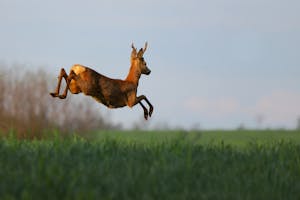
White-tailed deer are excellent jumpers.
Healthy adult deer can:
Jump around 7–8 feet high
especially when motivated by fear or food access.
This is one reason why shorter fences are often ineffective in areas with heavy deer pressure.
Deer Are Strong Swimmers
Although many people don’t realize it, deer are surprisingly capable swimmers.
They can:
- Cross rivers
- Swim across lakes
- Travel through marshes and wetlands
This helps deer expand into new habitat areas throughout New Jersey.
Deer Have Excellent Hearing and Smell
A deer’s senses are extremely advanced.
Sense of Smell
Deer rely heavily on scent to detect:
- Predators
- Humans
- Food sources
Hearing
Their large ears can rotate independently to pinpoint sounds from different directions.
Eyesight
Deer do not see detail like humans, but they are excellent at detecting movement, especially in low-light conditions.
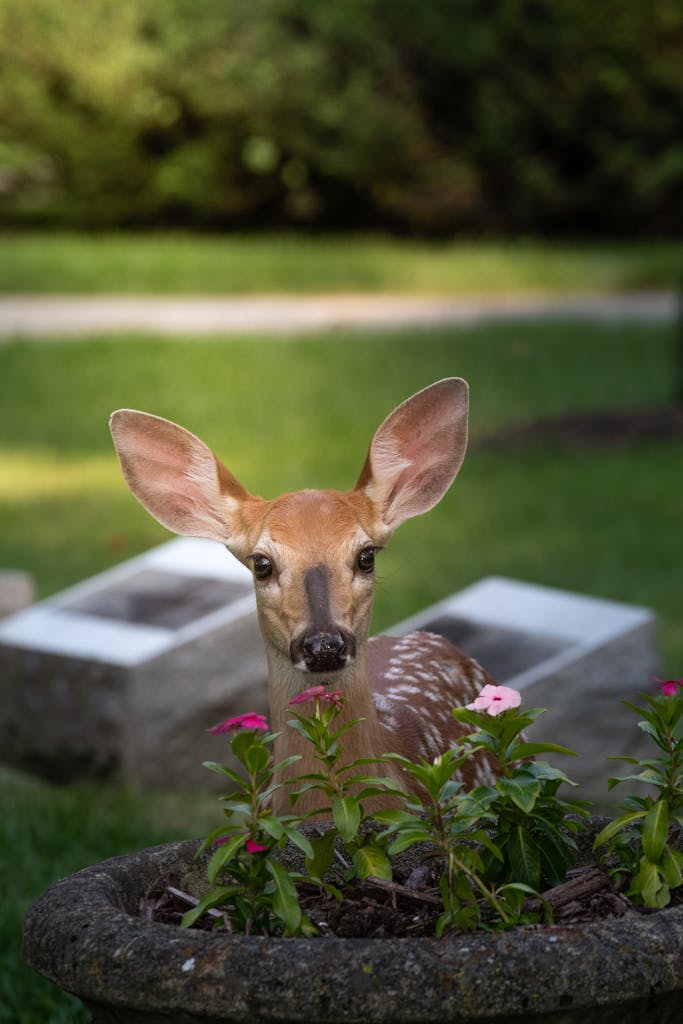
Fawns Have Natural Camouflage
Young deer, called fawns, are born with white spots that help them blend into vegetation and forest shadows.
During their first weeks of life:
- Fawns often remain hidden alone
- Their mothers return periodically to nurse them
- This is normal behavior
People sometimes mistakenly think hidden fawns have been abandoned when they have not.
Deer Change Their Coats With the Seasons
White-tailed deer grow different coats for:
- Summer
- Winter
Summer Coat
- Reddish-brown
- Thinner and lighter
Winter Coat
- Grayish-brown
- Much thicker for insulation
This seasonal coat change helps deer survive New Jersey winters.
Bucks Shed and Regrow Antlers Every Year
Male deer (bucks) shed their antlers annually.
After antlers drop in winter:
- New antlers begin growing in spring
- Growth is fueled by nutrition and hormones
- Antlers are covered in soft “velvet” during development
By fall:
- Velvet dries and sheds
- Hard antlers are ready for rut season
Deer Become More Aggressive During the Rut
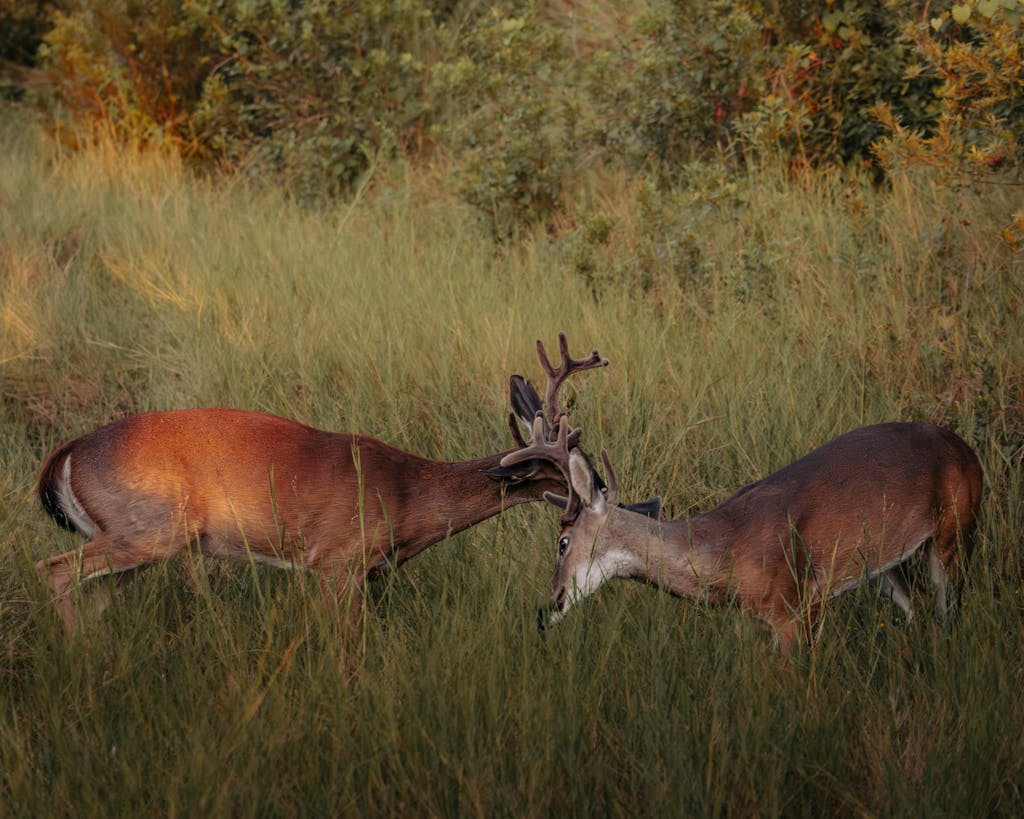
The rut is the deer breeding season.
During this period:
- Bucks travel farther than normal
- Bucks compete for mates
- Tree rubbing activity increases
- Vehicle collisions become more common
Rut activity in New Jersey typically peaks during:
Late October through December
Deer Adapt Extremely Well to Suburban Areas
One reason deer populations remain high in New Jersey is their ability to thrive near people.
Suburban neighborhoods often provide:
- Landscaping plants
- Lawns
- Shrubs
- Water sources
- Limited predators
Many neighborhoods effectively become year-round deer habitat.
Winter Can Dramatically Change Deer Feeding Behavior
In mild conditions, deer may avoid certain plants.
However, during:
- Harsh winters
- Drought conditions
- Food shortages
deer often become far less selective.
Plants considered “deer resistant” may suddenly become heavily browsed when natural food becomes scarce.
Deer Communicate Through Scent and Body Language
White-tailed deer use:
- Scent glands
- Tail movement
- Posture
- Vocalizations
to communicate danger, territory, and social status.
A raised white tail often signals:
Alarm or danger
and alerts nearby deer to flee.
New Jersey Deer Are Highly Adaptable Survivors
White-tailed deer have survived and expanded across New Jersey because they are:
- Intelligent
- Flexible feeders
- Fast breeders
- Excellent at adapting to human environments
Their success is one reason deer management and landscape protection have become major concerns throughout many parts of the state.
Related Deer Information
- Deer Population in New Jersey
- Why Deer Damage Landscapes
- Buck Rubbing Damage & Tree Protection
- Deer Resistant Plants for New Jersey
- Deer Fencing Options for NJ Properties
Final Thoughts
White-tailed deer are a fascinating part of New Jersey wildlife, but their growing populations continue to impact landscapes, gardens, forests, and residential communities across the state.
Understanding deer behavior is one of the best ways to better protect plants, trees, and property from damage while appreciating the role deer play in New Jersey’s environment.


