Why Do Deer Visit New Jersey Neighborhoods?
If deer seem to visit your yard almost every day, you’re not alone. Across New Jersey, white-tailed deer have learned that many neighborhoods provide everything they need to survive—including food, water, shelter, and safe places to travel.
Understanding why deer choose residential neighborhoods is the first step toward protecting your landscape and reducing unwanted visits.

Deer Aren’t Targeting Your Yard
Deer don’t recognize property lines. They simply travel where they can consistently find food, water, shelter, and safe travel routes.
Your yard may be one stop along a much larger route that deer use every day.
The goal isn’t to make deer “go away forever.” The goal is to make your property less attractive than other available food sources.
Beautiful Landscaping
Ornamental flowers, shrubs, and trees often provide more nutritious food than nearby natural vegetation.
Reliable Water
Birdbaths, ponds, irrigation systems, and streams provide dependable water throughout the year.
Safe Travel Corridors
Wooded lots, greenways, creek corridors, golf courses, and utility easements allow deer to move through neighborhoods with little disturbance.
Limited Predators
Most suburban neighborhoods have very few natural predators, making them comfortable places for deer to spend time.
Mild Winters
Landscaped properties often retain more available food during winter than surrounding forests.
Learned Behavior
Once deer discover dependable food, they often return repeatedly and may pass those travel routes from one generation to the next.
Deer Remember Good Feeding Areas
White-tailed deer are creatures of habit.
When they find a dependable source of food, they frequently return along the same travel routes.
That’s why homeowners often see deer visiting at similar times of day or following the same paths through neighborhoods.
Consistency is one of the reasons landscape protection works best when started before significant damage occurs.

One Thing That Makes The Problem Worse…
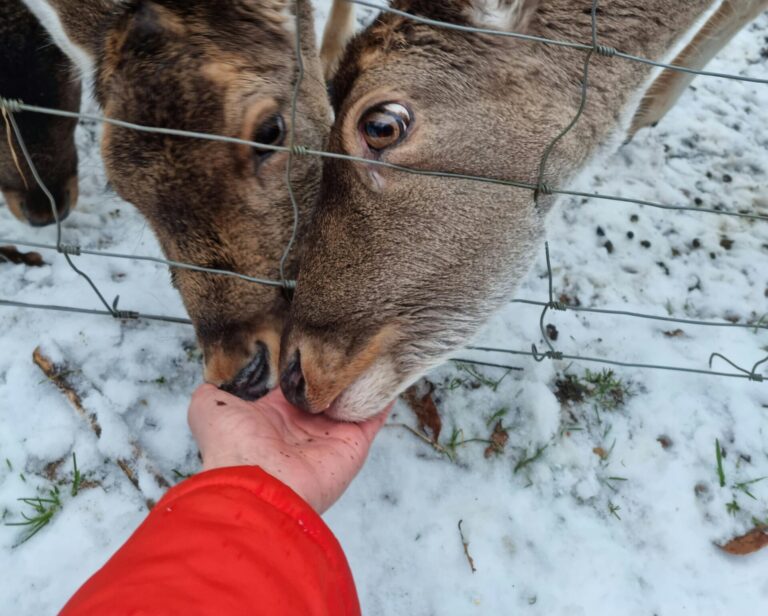
Feeding Deer
Many people feed deer because they want to help.
Unfortunately, feeding deer teaches them that neighborhoods are dependable food sources. It encourages repeated visits, concentrates deer into smaller areas, and can increase conflicts between wildlife and homeowners.
Helping deer doesn’t mean feeding them.
Keeping deer wild is one of the best ways to help both wildlife and your neighborhood.

Why Some Plants Get Eaten First
Some landscape plants are especially attractive because they produce tender new growth, flower buds, or blooms at times when deer are actively feeding.
Other plants may be ignored for years before changing weather, drought, or winter food shortages cause deer to browse them.
No landscape is completely deer-proof.
Related Guides
The Best Way To Reduce Deer Visits
Understanding why deer choose neighborhoods allows homeowners to make smarter decisions about landscaping, plant selection, and long-term protection.
By reducing the reasons deer visit your property, you can protect your landscape while helping keep deer wild.